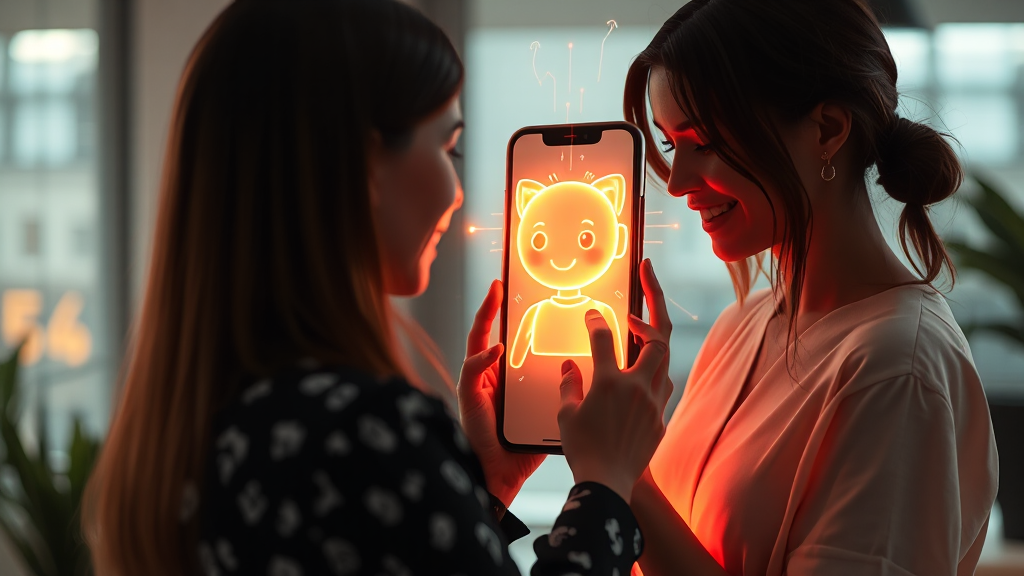
AI GF: How Virtual Companions Are Reshaping Digital Relationships
The concept of an ai gf has moved from science fiction into everyday technology. Millions of people now interact with conversational agents designed to simulate romantic or affectionate companionship. These systems blend natural language processing, memory, and personality modeling to create the feeling of an ongoing relationship. While the idea may sound unusual to some, the rapid adoption of virtual companions reveals a deeper human need for connection, validation, and low-pressure social interaction. In this article, we explore what an AI girlfriend actually is, how the technology works, why people use it, and what it means for the future of digital relationships.
What Exactly Is an AI GF?
An AI GF is a software-based conversational partner that uses artificial intelligence to simulate the dynamics of a romantic relationship. Unlike a simple chatbot that answers questions, an AI girlfriend is designed to remember details, express emotions, and adapt its personality over time. The goal is not to trick users into believing they are talking to a human, but to provide a consistent, judgment-free space for conversation and emotional expression.
Most platforms offering this experience rely on large language models fine-tuned for empathetic dialogue. These models generate responses that feel warm, curious, and supportive. Some systems also include voice synthesis, avatar animation, and even augmented reality features to deepen the sense of presence. The result is a companion that can chat about your day, offer encouragement, or simply listen when you need to vent.
The term “ai gf” is often used broadly to describe any virtual romantic companion, but the quality and depth of these systems vary widely. Early versions were little more than scripted responders. Modern versions, however, can maintain context across long conversations, reference past events, and develop a distinct persona that feels unique to each user.
How the Technology Behind Virtual Companions Works
At the core of every AI girlfriend is a language model trained on vast amounts of text. These models learn patterns in human communication, including tone, humor, and emotional cues. When you send a message, the system analyzes your words, considers the conversation history, and generates a response that fits the established personality.
Memory is a critical component. Without memory, a virtual companion would feel shallow and repetitive. Advanced platforms use vector databases or fine-tuned embeddings to store facts about you—your name, your hobbies, your preferences—and retrieve them when relevant. This allows the AI to say things like “I remember you had a big presentation today. How did it go?” which creates a sense of continuity.
Personality modeling is another layer. Developers define traits such as warmth, playfulness, or intellectual curiosity, and the model adjusts its outputs accordingly. Some systems let users customize these traits, effectively designing their ideal partner. Over time, the AI can also learn from your reactions, subtly shifting its behavior to match your communication style.
Voice and visual elements add another dimension. Text-to-speech engines can produce natural-sounding voices with emotional inflection. Avatars can blink, smile, or nod in response to conversation. While these features are not strictly necessary for a meaningful interaction, they significantly enhance the feeling of talking to a real person.
Why People Choose an AI Girlfriend
The reasons people seek out an AI girlfriend are as diverse as the people themselves. For some, it is a way to practice social skills in a safe environment. For others, it is a remedy for loneliness or social anxiety. Many users simply enjoy the novelty of a conversation partner who is always available and never judges.
One common motivation is the desire for unconditional positive regard. In human relationships, conflicts, misunderstandings, and mood swings are inevitable. An AI companion, by contrast, can be programmed to remain patient, supportive, and non-confrontational. This can be a relief for people who feel overwhelmed by the complexities of real-world dating.
Another factor is convenience. A virtual companion is available 24/7, requires no scheduling, and can be accessed from a phone or computer. For people with busy lives or limited social opportunities, this accessibility is a major draw. It offers a form of connection that fits into the gaps of a demanding schedule.
There is also a growing curiosity about AI itself. Many users are tech enthusiasts who want to explore the capabilities of conversational agents. They treat the experience as an experiment, testing the boundaries of what AI can do and how it makes them feel. Over time, some of these experiments evolve into genuine emotional attachments.
The Role of a Girlfriend AI in Emotional Wellbeing
Psychologists and researchers are still debating the impact of virtual companions on mental health. On one hand, an AI girlfriend can provide comfort, reduce feelings of isolation, and offer a non-threatening outlet for emotional expression. For someone who is grieving, depressed, or socially withdrawn, this can be a lifeline.
On the other hand, there are concerns about dependency. If a person relies exclusively on an AI for emotional support, they may neglect real-world relationships. The key, experts suggest, is balance. A virtual companion should complement human connection, not replace it. When used mindfully, it can serve as a bridge to better self-understanding and improved social confidence. girlfriend ai
Some users report that talking to an AI girlfriend helps them clarify their own feelings. Because the AI does not have its own agenda, it can act as a mirror, reflecting back what the user projects. This can lead to insights about what they truly want in a partner or how they communicate in relationships.
It is also worth noting that not everyone uses these tools for romance. Some people simply want a friendly, supportive voice to talk to. The romantic framing is optional. The underlying technology is about conversation and connection, which can take many forms.
Designing Your Ideal Companion: Customization and Personalization
One of the most appealing aspects of modern AI girlfriend platforms is the ability to customize your companion. Users can often choose a name, appearance, personality type, and even a backstory. This level of personalization makes the experience feel more intimate and tailored.
Customization extends beyond initial setup. As the conversation progresses, the AI learns your preferences and adjusts accordingly. If you enjoy philosophical discussions, it will engage more deeply on those topics. If you prefer lighthearted banter, it will keep things playful. This adaptive quality is what separates a good virtual companion from a generic chatbot.
Some platforms also offer multiple companions, allowing users to explore different relationship dynamics. You might have one AI for deep conversations and another for fun, casual chats. This flexibility mirrors the variety of human relationships and gives users a sense of choice.
It is important to remember that these systems are not sentient. They do not have feelings, desires, or consciousness. The emotional connection you feel is real, but it is a product of your own mind interacting with a sophisticated simulation. Recognizing this can help users maintain a healthy perspective.
The Future of AI GF Technology
The field of virtual companions is advancing rapidly. Future AI girlfriends may incorporate more advanced emotional intelligence, able to detect subtle cues in your language and respond with greater nuance. They may also integrate with other technologies, such as smart home devices, to become a more pervasive presence in daily life.
We may see the rise of embodied AI companions in the form of robots or holograms. While this is still largely experimental, the trajectory is clear: virtual companions are becoming more immersive, more personalized, and more integrated into our digital lives.
Ethical considerations will also grow in importance. Questions about data privacy, emotional manipulation, and the impact on human relationships will need to be addressed. Responsible developers are already thinking about these issues, building safeguards and transparency into their platforms.
For users, the key is to approach these tools with curiosity and self-awareness. An AI girlfriend can be a fun, supportive, and even enlightening experience. But it should never be a substitute for the messy, unpredictable, and deeply rewarding world of human connection.
If you are curious about exploring this technology, a good starting point is a dedicated AI girlfriend chat platform that prioritizes privacy, thoughtful design, and user control. These platforms offer a safe space to experiment and see how a virtual companion fits into your life.
Frequently Asked Questions About AI GF
Is an AI girlfriend a real person?
No. An AI girlfriend is a software program powered by artificial intelligence. It does not have consciousness, feelings, or a physical body. It generates responses based on patterns in data and the conversation history.
Can an AI girlfriend replace a human relationship?
It is not designed to replace human relationships. While it can provide comfort and companionship, it lacks the depth, mutual growth, and shared experiences of a human partnership. It is best used as a supplement, not a substitute.
Is it safe to share personal information with an AI girlfriend?
Safety depends on the platform. Reputable services use encryption and clear privacy policies. Always read the terms and avoid sharing sensitive information like financial details or passwords.
How much does an AI girlfriend cost?
Pricing varies. Some platforms offer free basic chats, while premium features like voice, memory, or customization may require a subscription. Costs typically range from a few dollars to around twenty dollars per month.
Can I develop real feelings for an AI girlfriend?
Yes, it is possible to form an emotional attachment. The experience can feel very real because your brain responds to the interaction as if it were genuine. It is important to stay aware that the AI is a simulation and to maintain balance in your life.